Dead Weight: How That Drawer Full of Old Chargers Is Quietly Inflating Your Electric Bill
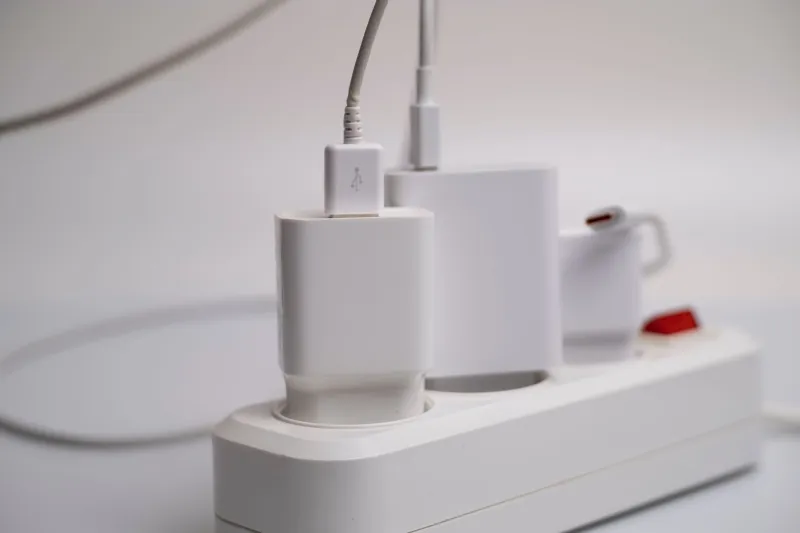
Most American homes share a remarkably consistent feature: somewhere in the kitchen, a bedroom, or a home office, there exists a drawer — or perhaps a cardboard box, a repurposed shopping bag — overflowing with the relics of every device upgrade made over the past decade. Tangled cables, bulky power bricks, proprietary connectors for phones long since recycled, and wall adapters whose original devices no one can quite remember. It feels harmless. It is not.
This accumulation of obsolete charging equipment represents one of the most overlooked sources of residential energy waste in the country. Understanding why these devices continue drawing power — and what that translates to on your annual utility bill — is the first step toward reclaiming both energy and money.
Why Chargers Consume Power Even When Nothing Is Attached
The behavior is counterintuitive but well-documented: most power adapters and charging bricks continue drawing electricity from the wall even when no device is connected to them. This occurs because the internal transformer inside a charger remains energized as long as it has access to a live circuit. The adapter is, in effect, always ready to deliver power — and that state of readiness has a cost.
The amount of electricity consumed by an idle charger varies considerably depending on its age and design. Older adapters manufactured before modern efficiency standards were adopted can draw anywhere from 0.5 to 5 watts in standby mode. That figure may sound negligible in isolation, but the math changes quickly when applied to the average household's collection.
Consider a home with ten outdated chargers plugged in across various rooms — a conservative estimate for families who have upgraded phones, tablets, laptops, and smart home devices over several years. At an average idle draw of 2 watts per unit, that represents 20 watts of continuous consumption. Over the course of a year, that totals roughly 175 kilowatt-hours of electricity. At the current US average residential electricity rate of approximately 16 cents per kilowatt-hour, that single drawer of forgotten chargers costs around $28 annually — without powering a single device.
For households with larger collections, or those in states where electricity rates run higher, the annual figure climbs accordingly.
The Efficiency Gap Between Old and New Charging Technology
Not all chargers are equally wasteful, and the gap between legacy adapters and modern charging equipment is substantial. Charging technology has advanced considerably over the past decade, driven in part by Department of Energy efficiency standards and the broader adoption of USB Power Delivery protocols.
A charger manufactured in 2010 for a discontinued smartphone operates on transformer and rectifier designs that prioritize function over efficiency. A contemporary GaN (gallium nitride) charger, by contrast, converts AC power to DC with significantly less heat loss and draws a fraction of the standby power when idle — often below 0.1 watts.
This efficiency gap means that replacing a cluster of old adapters with a single modern multi-port charger does more than reduce clutter. It actively lowers the baseline energy consumption of your home's charging infrastructure. The legacy equipment sitting in that drawer isn't just unnecessary — it's operating at an efficiency standard that the industry has long since moved past.
Conducting a Charging Equipment Audit
The most effective first step is a straightforward inventory. Pull every charger, power adapter, and cable out of storage and lay them out. For each item, ask three questions: Does a device in this household still require this specific connector or voltage? Is the device it originally powered still in active use? And if the answer to both is no, does the adapter serve any secondary function?
For items that clear those filters, a plug-in energy monitor — an inexpensive device available at most home improvement retailers — can measure the actual idle draw of each adapter. This transforms an abstract efficiency concern into a concrete number. Seeing that a particular brick draws 3.8 watts while doing nothing tends to be more motivating than any general estimate.
Chargers worth retaining generally fall into a few categories: those compatible with devices still in regular use, those conforming to universal standards such as USB-C Power Delivery that may serve future devices, and high-quality units that have been verified to draw minimal standby power.
Everything else is a candidate for removal from active service.
Safe Disposal: Where Old Chargers Should Actually Go
Removing obsolete chargers from your home requires more than tossing them in the recycling bin. Power adapters contain materials — copper wiring, plastic casings, and in some cases small quantities of regulated metals — that warrant proper e-waste handling.
Several accessible disposal pathways exist for US consumers. Major electronics retailers including Best Buy operate in-store recycling drop-off programs that accept small electronics and charging accessories at no charge. Manufacturer take-back programs, available through companies such as Apple, Dell, and others, provide another avenue. Municipal e-waste collection events, which most counties organize at least annually, handle these items in bulk.
For chargers that remain functional but are simply no longer needed in your household, donation to community organizations, shelters, or reuse programs is worth considering — particularly for units that remain compatible with widely used device categories.
What chargers should never do is end up in landfill, where the materials they contain can leach into soil and groundwater over time.
Rethinking the Charging Infrastructure of Your Home
The broader takeaway from a charger audit extends beyond the immediate energy savings. It prompts a reconsideration of how charging infrastructure is organized throughout the home — and whether the current arrangement reflects the actual devices in use or simply the accumulated history of every device ever purchased.
A rationalized approach to home charging involves fewer, more capable units positioned where they're actually needed. A single multi-port GaN charger on a nightstand can replace three or four legacy adapters. A USB-C hub at a desk can consolidate what was previously a tangle of individual bricks. Smart power strips with individual outlet switching allow specific adapters to be fully de-energized when not in use, eliminating standby draw entirely.
These are not large capital investments. A quality multi-port charger capable of handling a phone, tablet, and laptop simultaneously can be purchased for under $40. The efficiency gains and the simplification of your home's power setup justify the cost within a single billing cycle for most households.
The Cumulative Cost of Inertia
The charger drawer persists in most homes not because its contents are valuable, but because clearing it out requires a decision that keeps getting deferred. Each individual adapter seems too small to matter. The collective energy waste they represent, however, is real and ongoing.
For US households already managing rising utility costs, eliminating passive consumption from obsolete equipment is one of the most straightforward efficiency improvements available. It requires no renovation, no specialized knowledge, and no significant expense. It requires only the recognition that the technology graveyard collecting dust in your home is not inert — it's drawing from the grid, quietly, every hour of every day.
At HiWatronic, we believe that smarter technology choices begin with understanding what your current setup is actually doing. Sometimes, the most valuable upgrade is simply knowing what to unplug.