Engineered to Expire: How Software and Support Policies Push Working Devices Into Early Retirement
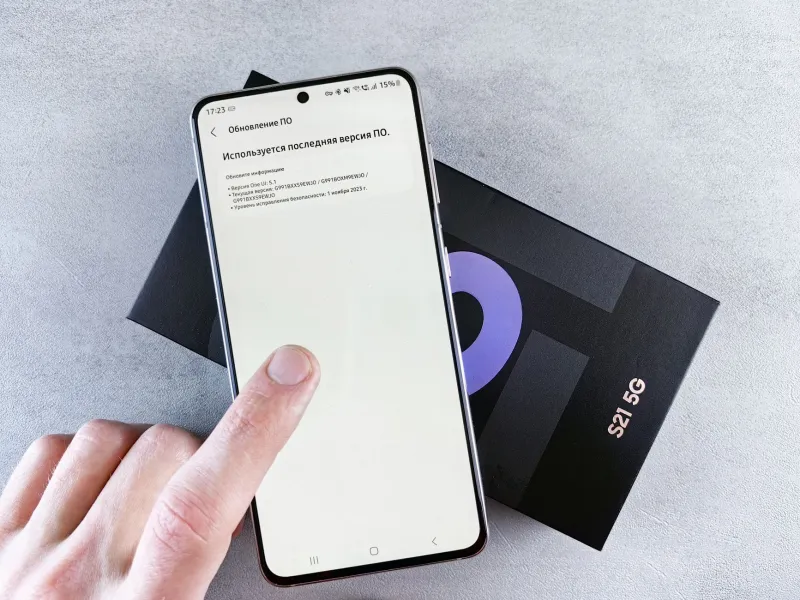
There is a particular frustration familiar to anyone who has owned a smartphone for more than three years. The device still powers on. The screen remains uncracked. The battery, while no longer pristine, still carries a charge. And yet, one morning, a critical app refuses to load — displaying a message informing the user that their operating system version is no longer supported. The hardware did not fail. The ecosystem did.
This is the architecture of modern obsolescence, and it operates largely out of sight.
The Mechanics of Software-Driven Deprecation
For decades, the concept of planned obsolescence was associated with physical design choices — thin battery contacts, proprietary screws, sealed housings that made repairs prohibitively expensive. Those practices persist. But in the current era of connected devices, manufacturers have developed a far more efficient tool: the software update.
When a device manufacturer announces the end of OS support for a given model, the downstream effects are rarely immediate. Instead, they accumulate gradually. Security patches stop arriving. Third-party developers, reluctant to maintain compatibility with older platform versions, quietly raise their minimum OS requirements. Banking apps, navigation tools, and streaming platforms begin enforcing version floors that exclude devices just two or three years old. The phone itself has not changed. The world it was designed to interact with has been deliberately restructured around it.
Industry analysts refer to this phenomenon as "ecosystem lock-out" — a condition in which a device's functional lifespan is determined not by its components but by the commercial decisions of platform operators and app developers.
"The hardware in a three-year-old flagship phone is genuinely capable of running most modern applications," noted one software architect who has worked with multiple consumer electronics firms. "The decision to cut support is not primarily an engineering one. It is a business one."
The Support Window Problem
In the United States, the standard OS support window for Android devices from major manufacturers has historically ranged from two to four years. Apple has maintained longer support cycles — often five to six years for flagship iPhones — though even that benchmark has drawn scrutiny from consumer advocates who note that older devices frequently receive degraded performance following major iOS updates.
The European Union's right-to-repair legislation and proposed minimum software support mandates have begun to shift the conversation globally. In the US, no equivalent federal standard currently exists, leaving consumers without a reliable baseline when assessing a device's true useful lifespan at the point of purchase.
For smart home devices, the situation can be even more compressed. Thermostats, security cameras, and connected appliances sometimes receive as few as two years of active software development before the manufacturer redirects resources toward a newer product line. When the companion app is updated to require a newer firmware version that the older hardware cannot run, the device becomes functionally inoperable — not because it has worn out, but because the support infrastructure was never designed to outlast the next product launch.
Artificial Feature Gates and Compatibility Constraints
Beyond outright support termination, manufacturers increasingly employ feature gating — the practice of withholding capabilities from older hardware through software restrictions rather than genuine technical limitations.
A device's processor may be fully capable of executing a new feature, but the manufacturer designates it as exclusive to newer models. This approach serves a dual commercial purpose: it creates a visible differentiation between product generations and it communicates to existing users that upgrading is the only path to full functionality.
Compatibility constraints operate similarly. When a manufacturer releases a new accessory, peripheral, or service tier that is arbitrarily restricted to devices launched within the past eighteen months, it effectively renders older hardware second-class within its own ecosystem — even if the underlying technology is entirely compatible.
What Consumers Can Do
Navigating this landscape requires a shift from passive consumption to informed advocacy. Several strategies can meaningfully extend a device's practical lifespan.
Prioritize support commitments at purchase. Before acquiring any connected device, research the manufacturer's published software support policy. Some brands now explicitly commit to five or more years of OS updates and security patches — a commitment worth factoring into the total cost of ownership calculation alongside price and specifications.
Evaluate alternative operating systems. For Android users, a growing ecosystem of community-maintained operating systems — such as GrapheneOS and LineageOS — offers continued security updates for devices whose manufacturers have ended official support. These options require technical comfort and carry trade-offs, but they represent a legitimate path to extended device use.
Audit app dependencies. Many consumers replace devices because one or two critical applications have dropped support for their OS version. Before concluding that a device is no longer viable, it is worth investigating whether alternative apps or web-based versions of those services can fulfill the same function without a hardware upgrade.
Engage with right-to-repair and software longevity advocacy. Organizations such as iFixit and the Electronic Frontier Foundation actively track legislative developments affecting device longevity in the US. Consumer pressure has already influenced some manufacturers to extend support windows; sustained engagement amplifies that effect.
Recognize the environmental dimension. The Environmental Protection Agency estimates that Americans generate more than 6.9 million tons of electronic waste annually. A significant portion of that waste consists of devices that remain physically functional. Extending a device's useful life by even one additional year represents a meaningful reduction in both personal expenditure and environmental impact.
The Tension Between Innovation and Artificial Deprecation
It would be reductive to characterize every product generation as purely manufactured necessity. Genuine technological advancement does occur. The computational capabilities, camera systems, and energy efficiency of current flagship devices represent meaningful improvements over hardware from five years prior. Not every upgrade cycle is cynical.
The more useful distinction is between obsolescence that is earned and obsolescence that is imposed. When a device genuinely cannot run a modern application because its processor lacks the requisite architecture, that is a technical reality. When a device is excluded from an application because the developer has set an artificially high OS floor to reduce their support surface area — or because a manufacturer has withheld a firmware update that would enable compatibility — that is a policy choice, not an engineering one.
Consumers who can distinguish between these two conditions are better positioned to make purchasing decisions that align with their actual needs rather than with the replacement cadence manufacturers prefer.
A Smarter Relationship with Your Hardware
At HiWatronic, we believe that technology serves its users best when it is built — and supported — to last. The devices in your home, your pocket, and your workspace represent real investments. Understanding the forces that shorten their useful lives is the first step toward making those investments work harder and longer for you.
The upgrade cycle is not always your enemy. But it should always be your choice.