5 Smart Water Technologies Every US Homeowner Should Know About in 2024
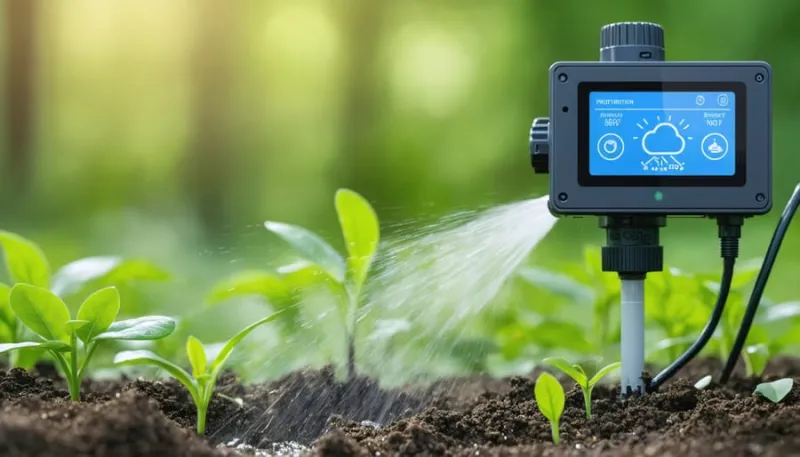
Photo: smart water management system home technology leak detection irrigation controller, via bluestem.ca
Water is one of the most underestimated utility expenses in the American household. According to the U.S. Environmental Protection Agency, the average family uses more than 300 gallons of water per day at home — and roughly 30 percent of that total is wasted through leaks, inefficient appliances, and overwatered lawns. At current national average water rates, that waste translates to hundreds of dollars disappearing down the drain each year.
The good news is that 2024 has brought a wave of intelligent water management solutions that put precise, real-time control directly in the hands of homeowners. These devices do not merely automate convenience — they generate measurable savings, reduce environmental impact, and integrate seamlessly with the broader smart home ecosystems that millions of Americans already rely on.
At HiWatronic, we have evaluated the landscape of connected water technology and identified five categories of innovation that are genuinely changing how homes consume and manage water.
1. Whole-Home Water Monitors: Know Your Flow in Real Time
The foundational layer of any smart water strategy is visibility. Whole-home water monitoring devices install directly on your main supply line and use ultrasonic or mechanical flow sensors to track every gallon that enters your home. More advanced models apply machine learning algorithms to identify usage patterns and flag anomalies — a running toilet, a slow pipe leak, or an unusually long irrigation cycle — before they escalate into costly problems.
Leading devices in this category can detect leaks as small as one drop per minute and send immediate push notifications to a paired smartphone app. Some models include automatic shut-off valves that can isolate the water supply remotely or trigger automatically when a potential burst pipe is detected — a feature that carries particular value for homeowners in freeze-prone northern states.
Real savings data: A study conducted by one major insurer found that homes equipped with automatic leak detection and shut-off technology filed 96% fewer water damage claims. The average water damage claim in the US exceeds $11,000. The upfront cost of a whole-home monitor is typically recouped within the first year through reduced insurance premiums alone, with many carriers offering policy discounts of 5–10% for verified installation.
Smart home integration: Most current-generation monitors are compatible with Amazon Alexa, Google Home, and Apple HomeKit, enabling voice queries, automated routines, and integration with broader home management dashboards.
2. Smart Leak Detection Sensors: Targeted Protection Where It Counts
While whole-home monitors provide a macro-level view, point-of-risk leak sensors deliver granular protection in the specific locations where leaks most commonly originate — under sinks, behind appliances, near water heaters, and around sump pumps.
These compact, battery-powered sensors rest on the floor or attach to surfaces and trigger instant alerts the moment they detect moisture. Premium models add temperature monitoring to identify pipe-freezing conditions and humidity tracking to flag elevated condensation levels that precede mold growth.
For homeowners who are not ready to commit to a full whole-home system, a network of point sensors placed at the five or six highest-risk locations in a home provides substantial protection at a fraction of the cost.
Real savings data: The EPA estimates that household leaks account for nearly 1 trillion gallons of wasted water annually across the US. A single leaking faucet dripping at one drip per second wastes more than 3,000 gallons per year. Early detection through smart sensors consistently eliminates this waste within hours of occurrence rather than weeks or months.
Smart home integration: Many sensor networks operate on Zigbee or Z-Wave protocols, making them compatible with popular hubs including SmartThings and Hubitat. Battery life on leading models now extends to three years or more, reducing maintenance demands significantly.
3. Smart Irrigation Controllers: Precision Watering for the American Lawn
Outdoor water use accounts for as much as 30% of total household consumption in the US — and in arid western states like California, Arizona, and Nevada, that figure climbs considerably higher. Conventional irrigation timers run on fixed schedules regardless of weather conditions, meaning sprinklers frequently activate during or immediately after rainfall. Smart irrigation controllers eliminate this inefficiency entirely.
These devices replace standard irrigation timers and connect to local weather data, soil moisture sensors, and historical evapotranspiration rates to calculate precisely how much water each zone of a lawn or garden actually requires on any given day. Some advanced models incorporate hyperlocal weather APIs that adjust watering schedules in real time based on forecasted precipitation.
Real savings data: The EPA's WaterSense program estimates that a WaterSense-labeled smart irrigation controller can save an average home approximately 8,800 gallons of water per year compared to a conventional timer. At the national average water rate, that equates to roughly $50–$80 in annual savings — with higher savings in municipalities with elevated water costs.
Smart home integration: Leading smart irrigation controllers integrate with Google Home, Amazon Alexa, and Apple HomeKit. Some platforms allow irrigation schedules to be coordinated with smart outdoor lighting, security systems, and even robotic lawn mowers for fully automated landscape management.
4. Hot Water Recirculation Systems: Eliminate the Wait, Reduce the Waste
Few household habits waste more water than running a faucet and waiting for hot water to arrive from a distant water heater. Depending on the distance between the heater and the fixture, homeowners can waste between 1 and 3 gallons per use simply waiting for the water temperature to reach a usable level.
Smart hot water recirculation systems address this by keeping hot water circulating through the supply lines so it is available instantly at any fixture. Modern smart versions go further by learning household usage patterns and pre-circulating hot water only during the times when demand is anticipated — minimizing the energy cost associated with maintaining circulation.
Real savings data: The Department of Energy estimates that smart recirculation systems can save the average household up to 12,000 gallons of water annually. For a family of four in a state like Texas or Florida, where both water costs and hot water demand are elevated, annual savings on combined water and energy bills can approach $150–$200.
Smart home integration: App-based control allows homeowners to activate on-demand circulation remotely, set temperature preferences, and review usage history. Voice activation through major smart home platforms is standard on premium models.
5. AI-Powered Water Quality Monitors: Drink Smarter, Live Better
The final frontier of smart water technology in 2024 is water quality intelligence. A new generation of inline and countertop monitors uses electrochemical sensors and AI-driven analysis to provide continuous assessment of tap water quality — measuring parameters including pH, total dissolved solids (TDS), chlorine levels, lead, and microbial indicators.
This category has grown substantially in relevance following high-profile water quality events in cities including Flint, Michigan and Newark, New Jersey, which heightened national awareness of municipal water system vulnerabilities. Smart quality monitors give homeowners an independent, real-time verification layer that does not rely solely on utility-issued reports.
Real savings data: Households that use smart quality monitors to verify the effectiveness of their existing filtration systems avoid unnecessary filter replacements — a common source of waste — while also identifying when replacement is genuinely required. Studies suggest that optimized filter replacement cycles reduce annual filtration costs by 20–35%.
Smart home integration: Premium water quality monitors sync with home management apps and can trigger automated filtration system responses when quality thresholds are breached. Integration with smart refrigerators and connected appliances that use water — such as coffee makers and ice makers — is an emerging capability in 2024 flagship models.
The Connected Water Home Is Already Here
The technologies outlined above are not aspirational concepts — they are commercially available, actively deployed in American homes, and generating the kind of measurable efficiency gains that justify their adoption on purely financial grounds. When framed against the broader smart home ecosystem, they also represent the next logical expansion of the connected home beyond lighting, entertainment, and climate control.
At HiWatronic, we carry a curated selection of smart water management products that meet our standards for reliability, compatibility, and genuine performance. Visit hiwatronic.com to explore our full lineup and find the solutions that fit your home, your climate, and your efficiency goals.
