Always On, Always Costing: The Standby Power Drain Eating Into Every American's Utility Bill
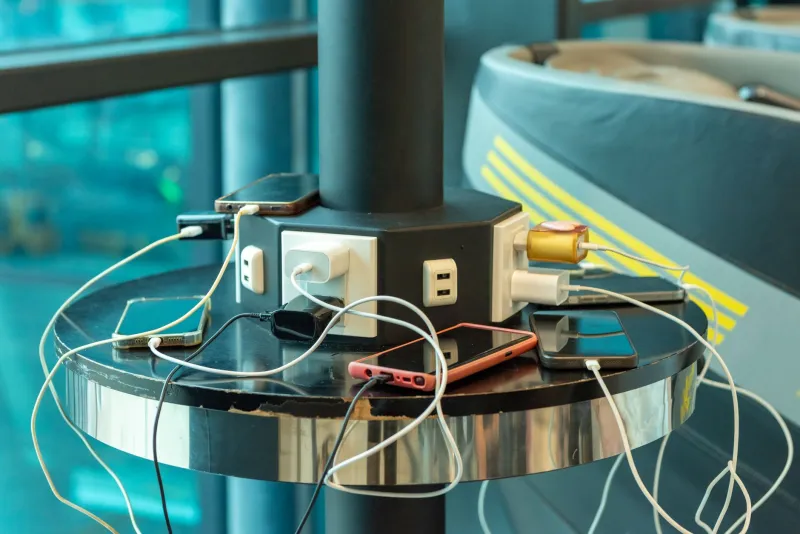
There is a quiet transaction happening inside nearly every American home, around the clock, every day of the year. Devices that appear to be off—televisions in standby mode, gaming consoles waiting for a voice command, cable boxes holding a schedule in memory—are drawing electricity continuously. This phenomenon, widely referred to as phantom load or standby power, is not a minor footnote in household energy consumption. According to the Lawrence Berkeley National Laboratory, standby power accounts for approximately 5 to 10 percent of residential electricity use in the United States, translating to an estimated $19 billion in annual energy costs nationwide.
That figure deserves to be read twice. Billions of dollars spent on electricity that powers nothing useful—no picture on screen, no audio in a room, no computation being performed on a user's behalf.
What Exactly Is Phantom Load?
Phantom load refers to the electrical current drawn by a device when it is not actively performing its primary function but remains plugged into an outlet. The term encompasses a spectrum of operational states: sleep mode, standby mode, soft-off mode, and even the passive draw of power adapters and chargers left plugged in without a connected device.
The distinction matters because modern electronics rarely achieve a true zero-draw state when switched off. A smart TV, for instance, continues to listen for remote signals, maintain a network connection, and run background firmware processes even when the screen is dark. A gaming console in "instant-on" mode can consume anywhere from 70 to 150 watts while waiting for a voice prompt—a figure that rivals the draw of a fully active laptop.
Common phantom load offenders in the average US home include:
- Cable and satellite set-top boxes — Often among the worst performers, drawing 15 to 30 watts continuously regardless of whether anyone is watching.
- Gaming consoles — Particularly those configured for instant wake, which maintain high-speed network connections and cache updates in the background.
- Smart televisions — Standby draws vary significantly by brand and model, but network-connected sets rarely drop below 1 to 3 watts, and many exceed that.
- Microwave ovens — The clock display and control panel can consume more electricity annually than the appliance uses for actual cooking.
- Desktop computers and monitors — Sleep states vary in efficiency; older systems in particular may draw 20 or more watts during nominal rest.
- Phone chargers and power adapters — Even without a device attached, a transformer left in an outlet continues to convert and dissipate energy as heat.
Why Do Manufacturers Design Products This Way?
The honest answer is that standby power is a design compromise, not an oversight. Consumers have come to expect instant responsiveness—a television that wakes in under two seconds, a console that resumes exactly where gameplay was paused, a smart speaker that responds to a wake word without delay. Achieving that responsiveness requires keeping certain subsystems powered and ready at all times.
There is also a commercial dimension. Manufacturers of streaming devices and smart TVs benefit from maintaining persistent network connections that facilitate automatic software updates, data collection, and advertising delivery. A device that powers down completely cannot perform these background functions, which have become integral to the business models supporting many consumer electronics platforms.
Regulatory pressure has gradually moved the industry toward greater efficiency. The US Department of Energy's appliance standards and the voluntary ENERGY STAR program have established standby power thresholds for many product categories, pushing manufacturers to reduce idle draw. The European Union's Ecodesign Regulation has been particularly aggressive in this area, setting hard limits that have influenced global product design. However, compliance with these standards does not eliminate phantom load—it simply establishes a floor below which the worst offenders should not fall.
Emerging Technology Is Changing the Equation
The engineering community has not been idle on this front. Several promising technologies are beginning to reshape how devices manage power in their inactive states.
Ultra-low-power microcontrollers now allow devices to maintain essential standby functions—network listening, remote signal detection, scheduled wake—while consuming fractions of a watt rather than several watts. These chips operate at voltages and clock speeds far below those of primary processors, enabling a meaningful separation between "alert" and "active" states.
Near-field communication (NFC) and Bluetooth Low Energy (BLE) wake triggers are being incorporated into newer product designs, allowing a device to remain in a genuinely deep sleep state and wake only when a compatible signal is detected in close proximity. This approach dramatically reduces the energy cost of standby readiness.
Smart power strips with occupancy sensing represent a practical consumer-side solution already available in the market. These devices cut power to secondary outlets when a primary device—typically a television or computer—enters a low-draw state, effectively eliminating phantom load from peripherals without requiring any behavioral change from the user.
Adaptive standby scheduling, already appearing in some smart home ecosystems, allows devices to enter deeper power states during hours when usage patterns suggest they will not be needed. A television that learns it is never switched on between midnight and 6 a.m. can disable its network radio and remote receiver during those hours, reducing standby consumption without sacrificing perceived responsiveness during active periods.
What You Can Do Right Now
While the technology landscape continues to evolve, there are concrete steps US households can take today to quantify and reduce their phantom load exposure.
Conduct a standby audit. A plug-in power meter—an inexpensive tool available at most hardware retailers—can measure the draw of individual devices in their various states. Spending a weekend profiling the electronics in your home will quickly reveal which devices warrant attention and which are already reasonably efficient.
Use smart plugs with scheduling. Wi-Fi-enabled smart plugs allow specific outlets to be switched off during predictable non-use periods, such as overnight or during work hours. Many integrate with existing smart home platforms, enabling automated schedules that require no ongoing manual intervention.
Reconfigure console and TV settings. Most modern gaming consoles and smart televisions offer energy-saving modes that reduce standby draw significantly, at the cost of slightly longer wake times. For households that can tolerate a five-second startup delay rather than an instant one, this adjustment alone can reduce console standby consumption by 80 percent or more.
Unplug chargers and adapters when not in use. It is a simple habit that eliminates a diffuse but persistent source of phantom draw across every room in the home.
Prioritize ENERGY STAR certification when purchasing new devices. While not a guarantee of zero standby draw, ENERGY STAR-certified products have been independently verified to meet efficiency thresholds that set them apart from uncertified alternatives.
The Broader Picture
Phantom load is not merely a personal finance issue. Aggregated across 130 million US households, the electricity wasted on standby power represents a meaningful share of national grid demand—demand that must be met by generation capacity, transmission infrastructure, and the associated carbon emissions. Reducing standby consumption at scale would yield environmental benefits that extend well beyond any individual utility bill.
The technology to address this problem exists. Manufacturers are under increasing pressure—regulatory, competitive, and reputational—to reduce the idle draw of their products. But in the interim, informed consumers equipped with the right tools and habits can take meaningful control of the electricity their homes consume, even when every screen in the house appears to be dark.
At HiWatronic, we believe that smarter technology should work for you—not against your budget. Understanding phantom load is the first step toward ensuring it does.

