Always Listening, Always Sending: The Constant Data Conversations Your Smart Devices Are Having Without You
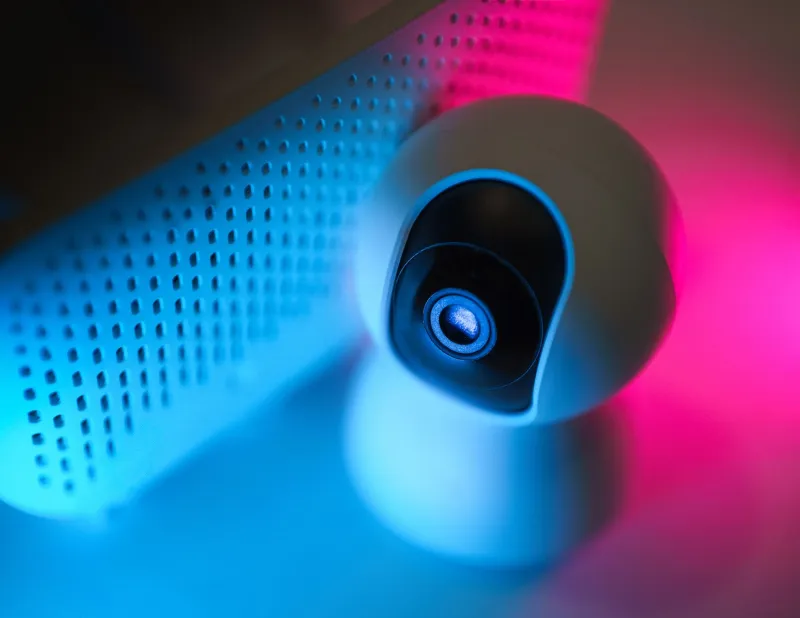
There is a reasonable assumption most Americans make when they set down their phone, mute their smart speaker, or simply walk out of a room: that their devices go idle too. In practice, that assumption is largely incorrect. Consumer electronics — from refrigerators with touchscreens to Wi-Fi-connected light switches — maintain ongoing dialogues with remote servers long after any human interaction has ended. Understanding what is being transmitted, why, and to whom is not a matter of technical paranoia. It is a matter of informed ownership.
The Architecture of Persistent Communication
Modern smart devices operate on a framework that engineers refer to as "always-on connectivity." This design is not incidental — it is foundational to how these products deliver their advertised functionality. Remote firmware updates require a device to periodically check in with a manufacturer's update server. Cloud-dependent features, such as voice recognition processing or AI-driven energy optimization, demand a continuous or near-continuous data channel. Diagnostic telemetry — data that manufacturers collect to identify hardware failures, software bugs, and usage patterns — runs on its own schedule, typically independent of user activity.
The result is a household ecosystem in which dozens of devices may be exchanging packets of data with external servers at any given hour of the day. Network monitoring tools, available to technically inclined consumers, routinely capture this traffic. What they reveal is often surprising in its volume and frequency: a smart TV pinging an analytics endpoint every few minutes, a connected security camera uploading compressed metadata to a cloud platform overnight, a voice assistant transmitting audio snippets for quality review purposes that the user never explicitly authorized.
What the Documentation Actually Says
Manufacturers are not entirely silent on this subject. Privacy policies and terms of service agreements for major smart home platforms do, in many cases, disclose data collection practices. The challenge lies in accessibility. These documents are frequently written in dense legal language, run to dozens of pages, and are updated without prominent consumer notification. A clause permitting the collection of "device performance data and usage statistics" may technically cover a broad range of telemetry, but it communicates very little to the average household consumer trying to understand what information is leaving their home network.
Federal disclosure requirements in the United States have not kept pace with the complexity of modern connected devices. The Federal Trade Commission has issued guidance and pursued enforcement actions related to deceptive data practices, but no comprehensive federal privacy statute currently mandates granular disclosure of real-time device communication behaviors. Some states, notably California under the California Consumer Privacy Act, provide residents with stronger audit and opt-out rights — but these protections are not uniform across the country.
The Security Dimension
Privacy concerns and security risks, while related, are distinct issues. The steady outbound data streams from smart devices also represent persistent attack surfaces. Each communication channel a device maintains is a potential vector for interception or manipulation. Researchers have documented cases in which improperly secured telemetry endpoints allowed third parties to observe device behavior data, infer household occupancy patterns, or — in more severe instances — exploit vulnerabilities in the communication protocol itself.
Firmware update mechanisms, while essential for patching security flaws, introduce their own risks if not implemented with rigorous authentication standards. A device that automatically accepts updates from a manufacturer server is trusting that server implicitly. If that server is compromised, or if the update mechanism lacks cryptographic verification, the consequences can extend well beyond data exposure.
Home network segmentation — the practice of isolating smart devices onto a separate Wi-Fi network from computers and phones — is a widely recommended mitigation strategy among cybersecurity professionals. It limits the potential damage if a device is exploited, preventing lateral movement to more sensitive systems on the same network.
Auditing Your Own Network
Consumers who wish to understand their home network's outbound traffic have several practical tools available. Router-level monitoring, accessible through the administrative interface of most modern home routers, can display connected devices and, in some cases, the domains they are communicating with. More granular analysis is possible through dedicated network monitoring solutions, some of which are designed specifically for non-technical users and present data in plain-language dashboards.
For those seeking a more hands-on approach, pi-hole — an open-source network-level ad and tracker blocker — can be configured to log and block DNS requests from any device on a home network. This provides a detailed record of which external addresses devices are attempting to contact and offers the ability to block specific endpoints without disrupting core device functionality.
Reviewing the privacy settings within each device's companion application is also a meaningful step. Many platforms now include options to limit diagnostic data sharing or opt out of personalized advertising data collection. These settings are not always prominently displayed, but they are increasingly present as regulatory pressure and consumer awareness have grown.
Practical Steps for US Consumers
A structured approach to auditing and managing smart device communications does not require advanced technical expertise. The following steps represent a reasonable starting point for most households:
Review your router's connected device list. Identify every device currently on your network. Many consumers discover hardware they had forgotten was connected.
Check privacy settings in every companion app. Navigate to the data-sharing, diagnostics, and advertising sections of each application. Disable collection categories that are not essential to the features you actively use.
Read the privacy policy summary, not just the full document. Many manufacturers now publish simplified privacy summaries. These are imperfect but offer a faster route to understanding core data practices.
Create a guest network for smart home devices. Most modern routers support multiple SSIDs. Placing smart devices on a separate network limits their access to other systems in your home.
Register for manufacturer update notifications. Privacy policy changes are often disclosed by email or through app notifications. Staying informed allows you to reassess your settings when terms change.
A Question of Informed Ownership
The convenience that connected devices deliver is genuine. Remote access, automated routines, energy monitoring, and proactive maintenance alerts represent real value for American households. The question is not whether that value exists, but whether consumers are receiving the complete picture of what they are exchanging for it.
Data transmitted from a home network is not an abstraction. It reflects occupancy patterns, behavioral habits, appliance usage, and in some cases, audio or visual information captured within private living spaces. Treating that data with the same deliberateness one would apply to a financial or medical record is not an overreaction — it is an appropriate response to the actual sensitivity of the information involved.
At HiWatronic, we believe that smarter technology should mean technology that works transparently for the consumer, not around them. Understanding the communication behavior of the devices in your home is the first step toward ensuring that the intelligence built into your hardware is genuinely serving your interests.

