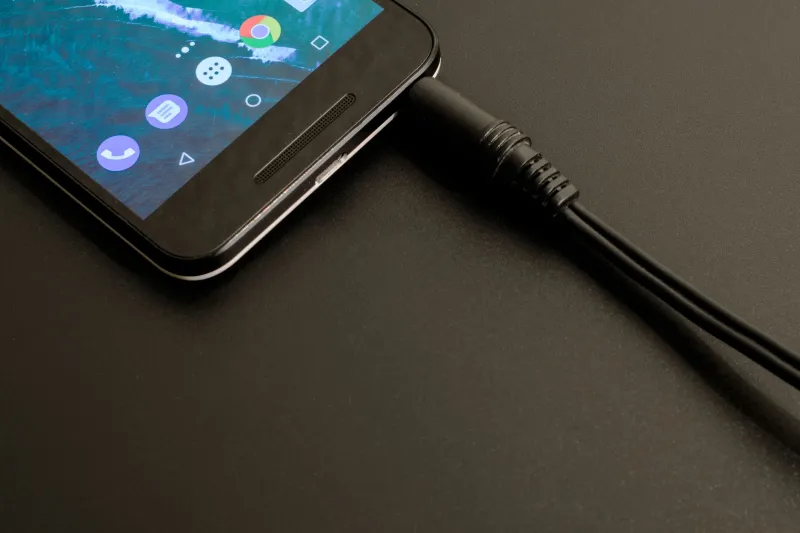
The Disposable Lifeline: Understanding Why Charging Cables Fail So Fast and Cost So Much to Replace
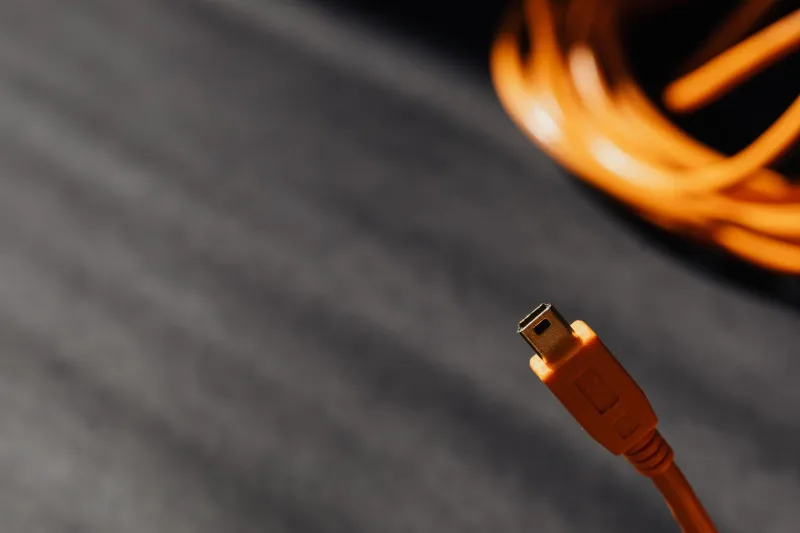
For something so fundamental to daily life, the charging cable receives remarkably little respect. It gets coiled tightly, stuffed into bags, bent at sharp angles, and yanked from ports by the cord rather than the connector. But consumer behavior alone does not explain why a product with no moving parts, no processor, and no software fails with such reliable frequency. The full explanation runs deeper — into material science, manufacturing economics, and the quiet commercial logic that keeps replacement cables perpetually in your shopping cart.
A Deceptively Simple Product With a Surprisingly Complex Failure Profile
At first glance, a charging cable appears almost primitive: a few conductors wrapped in insulation, terminated by connectors on each end. Yet that apparent simplicity conceals a layered construction that depends on the quality of every individual component. The internal conductors — typically stranded copper — must carry current reliably under repeated flexion. The insulation jacket must resist cracking, UV degradation, and the mechanical stress of being bent thousands of times. The strain relief, that tapered section where the cable meets the connector, must absorb the angular forces that would otherwise concentrate directly on the solder joints inside the plug.
When any one of these elements is compromised, the entire cable fails. And in the current market, compromise is common.
Where the Manufacturing Shortcuts Hide
Cable manufacturing is a volume business with thin margins, and cost pressure expresses itself in ways that are invisible at the point of purchase. Conductor gauge is one of the most common casualties. Thinner copper strands reduce material cost but also reduce current-carrying capacity and, critically, fatigue resistance. A cable built with undersized conductors will begin to show internal wire breaks far sooner than one built to a more generous specification — often well before the outer jacket shows any visible sign of wear.
Strain relief design is another frequent shortcut. Effective strain relief requires a graduated transition zone that distributes bending stress across a length of cable rather than concentrating it at a single point. Many budget cables use a rigid plastic boot that provides the appearance of strain relief without the mechanical function. The result is a hard pivot point directly at the connector junction — precisely where internal conductors are most vulnerable.
Jacket materials vary considerably in quality as well. Higher-grade thermoplastic elastomers maintain flexibility across a wider temperature range and resist the cracking that causes cables to split open at high-stress zones. Lower-cost PVC compounds harden over time, particularly in cold environments, making them brittle and prone to fracture. For consumers in northern states or those who frequently charge in vehicles during winter months, this material difference has a measurable impact on cable longevity.
The Economics of the Replacement Cycle
If cables were built to last, the replacement market would shrink considerably. That market — encompassing both first-party manufacturer cables and the vast third-party accessory industry — generates substantial revenue. Apple, for instance, has historically charged $19 to $29 for a single USB-C or Lightning cable. Samsung and other Android manufacturers price their proprietary cables in a similar range. Even the proliferation of third-party alternatives has not driven prices to levels that reflect the actual material cost of the product.
Brand-certified cables carry a premium justified in part by licensing fees — MFi certification for Apple accessories, for example, requires manufacturers to pay for the privilege of using the authentication chip that allows the cable to function without triggering software warnings. Those fees are passed directly to consumers. What is less clear is whether certification reliably translates to superior durability. Independent testing has repeatedly shown that some certified cables fail at rates comparable to uncertified alternatives, while some uncertified cables outperform their branded counterparts on longevity metrics.
The practical consequence for the average American household is a recurring expenditure that accumulates quietly. A family replacing two or three cables per year across multiple devices can easily spend $60 to $100 annually on what should be a one-time infrastructure purchase.
What Durability Actually Looks Like
Not all cables are built to fail quickly. The market does contain products engineered for longevity, and they share identifiable characteristics. Braided nylon or aramid fiber jackets — rather than bare PVC or TPE — provide substantially greater abrasion resistance and flex durability. Reinforced strain relief, sometimes achieved through an angled connector design that naturally redirects bending forces, reduces stress concentration at the most vulnerable junction. Thicker conductor gauges, particularly in cables rated for higher wattage charging, indicate a more conservative engineering approach that tends to extend service life.
Consumers willing to invest $15 to $25 in a well-constructed third-party cable from a reputable manufacturer often find that the upfront premium is more than recovered through extended service life. The key is knowing which specifications to evaluate rather than relying on packaging claims alone.
Practical Steps to Extend Cable Lifespan
Beyond purchasing decisions, usage habits have a significant effect on how long a cable survives. Several practices reliably reduce premature failure:
Avoid sharp bends at connectors. The greatest stress on any cable occurs at the point where it exits the plug housing. Using a right-angle adapter or simply ensuring that the cable exits at a gentle curve rather than a sharp angle can dramatically reduce fatigue at this junction.
Use cable clips or organizers for storage. Coiling a cable tightly — particularly around itself — creates repeated stress patterns that accelerate internal conductor fatigue. Loose coiling with a minimum bend radius of several inches is preferable.
Disconnect by the plug, not the cord. This is well-understood advice that remains widely ignored. Pulling a cable from a port by gripping the cord transfers force directly to the solder joints inside the connector, which are not designed to bear tensile loads.
Manage heat exposure. Leaving cables in vehicles during summer months subjects them to temperatures that degrade jacket materials and, in some cases, the adhesives used in connector assembly. Storage in a moderate-temperature environment extends material life noticeably.
Holding Manufacturers to a Higher Standard
The deeper issue is one of accountability. Charging cables are not optional accessories — they are the functional interface between a consumer's power infrastructure and their devices. Treating them as consumables to be replaced on a recurring basis serves manufacturer revenue at the expense of consumer value and, in aggregate, generates substantial electronic waste.
Some movement toward standardization is already underway. The European Union's mandate requiring USB-C as a universal charging standard for consumer electronics — a requirement that influences products sold globally, including in the US market — at least reduces the proliferation of proprietary connectors that lock consumers into single-brand replacement ecosystems. But connector standardization does not address build quality, and it does not prevent manufacturers from continuing to sell cables that fail within a year of purchase.
Consumers exert the most leverage through purchasing behavior. Prioritizing cables with published bend-cycle ratings, reinforced construction, and verifiable warranty terms sends a market signal that durability is a valued attribute — not an afterthought. Until that signal is strong enough to reshape manufacturing incentives, the charging cable will remain what it currently is: the most frequently replaced component in the modern home's technology infrastructure, and one of the least examined.
At HiWatronic, we believe that every component in your technology ecosystem — from the device in your hand to the cable connecting it to the wall — should be built to perform reliably and last. Understanding where and why products fall short is the first step toward demanding better.